
Knife bin clear‑out removes thousands of weapons from Essex streets
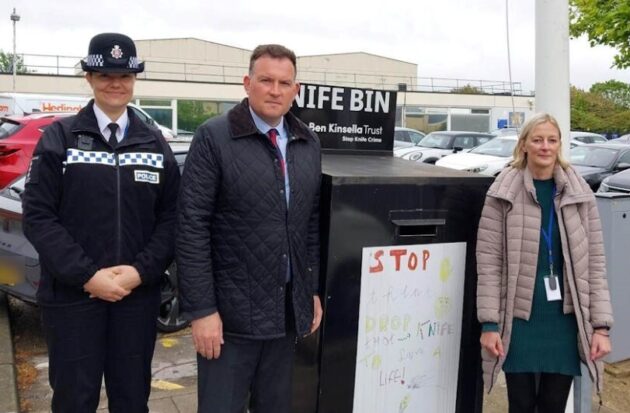
Deputy PFCC Joel Charles joined Harlow district commander Chief Inspector Emily Holmes and DS Karen Osborne to empty the Harlow knife bin during Sceptre week.
Officers across Essex made dozens of arrests and removed thousands of knives from circulation during a week‑long focus on tackling knife crime.
The activity formed part of Sceptre week, a national campaign shining a spotlight on policing’s work to prevent knife crime and serious violence.
Across the county, officers carried out targeted weapon sweeps in public spaces, visited businesses to promote the lawful and responsible sale of knives, and engaged with pupils during visits to local schools.
Targeting offenders carrying weapons, officers made 20 arrests and carried out 16 stop and searches.
Essex Police, supported by the PFCC manages 15 knife bins across the county, providing an anonymous way for people to surrender bladed items.
The bins were emptied during the week, with almost 1.3 tonnes of knives and other weapons recovered.
This equates to around 6,000 knives, based on an average weight reflecting the wide range of items surrendered, from kitchen knives to larger weapons.
Roger Hirst, Essex Police Fire and Crime Commissioner, said:
“We have to get knife crime down and stop our young people being hurt. Sceptre is Essex Police’s way of doing that, together with their partners.
"It means enforcement, it means prevention, it means engaging with young people, working with businesses, providing safe ways for knives to be surrendered.
"The significant number of weapons recovered demonstrates it works. While Essex continues to see a sustained reduction in knife-enabled crime, we will not be complacent. We will keep focusing on prevention, enforcement and education to protect our communities."
Knife crime continues to fall across Essex.
In the year to date, 2,975 knife‑enabled offences were recorded, including 995 offences of possession of a weapon.
This represents 476 fewer offences than the same 12‑month period last year – a 13% reduction year-on-year.