
PFCC Conference 2026: Creative clubs key tools in fight against crime
Creative activity should be a key tool in helping people live happier, healthier and crime-free lives, a conference has heard.
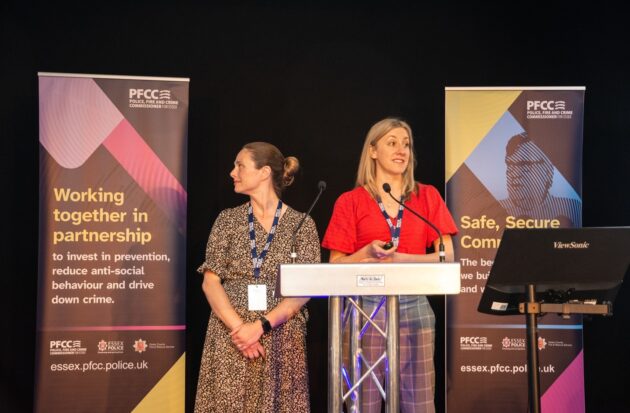
Jess Plant and Dr Natasha Richards-Crisp, from national charity Creative Lives, spoke at the annual Police, Fire and Crime Commissioner for Essex (PFCC) conference, The Power of Partnerships: Keeping Essex Safe Together.
They explained how the seemingly simple act of joining a creative group can help people feel more connected to their community, improve health and wellbeing, strengthen social connections, and foster pride in the places where they live.
Delegates also heard how creative health mapping, both nationally and in Essex, is helping to build a clearer picture of existing activity, identify gaps, and inform future development.
Jess Plant, from Creative Lives, said:
“Our aim is to enable people to live creative lives and to explore the role that art and creativity can play in improving health outcomes and preventing crime.”
“Essex County Council asked us to map creative health activity across Essex and explore the barriers to, and opportunities for, delivering creative interventions that support better health outcomes. Our report[1], published in 2025, showed the wealth of work already happening across the county, including art, music, dance, drama, literary, gardening, cooking, photography and painting.
“Being part of a group may seem so simple, but creativity can be used to improve health and wellbeing. Creative health is not just a nice idea, there is a wealth of evidence behind it.
“Last year, the Know Your Neighbourhood programme, funded by Arts Council England and the Department for Culture, Media and Sport (DCMS), commissioned creative activities at a neighbourhood level, and found that 89% of participants reported stronger social connections, demonstrating the role these projects can play in reducing isolation and fostering community engagement.[2] The initiative provided various creative and heritage activities for people to get involved in, within their local neighbourhoods.”
The report identified a clear set of recommendations for Essex, including establishing an Essex-wide Creative Health Network, providing bespoke training for practitioners, raising the profile of creative health, and undertaking place-based research in Tendring and Castle Point to explore how creativity can help address health inequalities.
Dr Natasha Richards-Crisp, Coordinator of the Essex Creative Health Network, said:
"The theme of today's conference was the power of partnerships, and that's exactly what creative health is about. By connecting organisations, sharing learning and building stronger relationships across sectors, we can help creativity become a more recognised part of improving health and wellbeing, and building stronger communities across Essex."
Much of this work is now underway through the Essex Creative Health Network, which brings together partners from the health, cultural, voluntary and public sectors to strengthen collaboration, share learning and embed creative health across the county.
The Network will continue to meet throughout the coming year as it works with partners across Essex to strengthen the role of creativity in improving health and wellbeing.
For more about Creative Lives health mapping Essex, visit: Mapping Creative Health in Essex | Creative Lives